
TL;DR: The Best Cat Feeding Choice
The best feeding choice for your cat is not only about the food. It also depends on the bowl shape, bowl height, feeding schedule, water placement, hygiene, and your cat’s eating behaviour.
For most cats, a comfortable feeding setup includes a wide, shallow bowl, a slightly raised feeding height, fresh water placed away from food, and a consistent mealtime routine.
If your cat pulls food out of the bowl, eats too fast, avoids water, or leaves food around the edges, the feeding setup may need a small adjustment. Petea’s MEJA elevated dining collection and MINOM water purifiers are designed to support a cleaner, calmer daily feeding routine.
Choosing the best feeding setup for your cat can feel simple at first.
You buy a bowl, pour the food, add water nearby, and expect everything to work.
But cats are tiny opinion machines wrapped in fur. One cat may happily eat from almost anything, while another may reject a bowl because it is too deep, too narrow, too low, too close to water, too noisy, too slippery, or simply not up to royal standards.
That is why your cat’s feeding choice should include more than just the type of food. A good feeding routine looks at the full picture: what your cat eats, how they eat, where they eat, how comfortable their posture is, and whether their water station encourages healthy drinking habits.
In this guide, we will walk through how to choose the right feeding setup for your cat, including bowl type, raised bowl height, food placement, hydration, hygiene, and simple signs that your cat may need a better mealtime arrangement.
Why Your Cat’s Feeding Setup Matters
Food quality matters, of course. But even the best food can become less appealing if your cat dislikes the bowl or feeding area.
Cats are sensitive to texture, smell, freshness, space, and routine. Their whiskers are sensitive. Their noses are strong. Their bodies are built for a specific kind of eating posture. They may also prefer to separate their food and water areas, especially if crumbs fall into the water bowl.
A better feeding setup can help your cat feel calmer during meals. It can also reduce mess, support better posture, make food easier to reach, and encourage a cleaner daily routine.
This is especially important for:
- Senior cats
- Large cats
- Flat-faced breeds
- Cats that eat too quickly
- Cats that pull food out of the bowl
- Cats that avoid deep or narrow bowls
- Multi-cat households
- Cats that do not drink enough water
The right feeding choice is not about making your cat’s dining space fancy. It is about making the daily routine easier, cleaner, and more comfortable.
What Is the Best Feeding Choice for Cats?
The best feeding choice for cats is one that matches their natural behaviour and physical comfort.
For most cats, this means:
- A wide, shallow food bowl
- A slightly raised feeding position
- A clean bowl material such as ceramic, stainless steel, or glass
- Fresh water placed away from the food area
- A stable bowl or stand that does not slide
- A consistent feeding routine
- Food portions that match your cat’s age, weight, and activity level
There is no one perfect setup for every cat. Some cats prefer plates. Some prefer bowls. Some enjoy wet food. Some are dry food loyalists. Some want privacy while eating. Others want to be watched, because apparently dinner is a performance.
The key is to observe your cat’s behaviour. Your cat will usually show you what works and what does not.
Food Bowl Shape: Why Wide and Shallow Is Usually Better
One of the easiest feeding choices to improve is the bowl shape.
Many cat bowls are too deep or too narrow. This may cause your cat’s whiskers to press against the sides while eating. Some cats do not mind this. Others may become uncomfortable, fussy, or messy during meals.
This is often described as whisker fatigue or whisker stress. It is not considered a disease, and not every cat is affected. However, many cats do seem to prefer bowls that give their whiskers more room.
A wide, shallow bowl gives your cat more space to eat without pushing their face deep into the bowl. It also makes food easier to reach, especially for wet food or flatter food textures.
Signs Your Cat May Dislike Their Bowl
Your cat may prefer a wider or shallower bowl if they:
- Pull food out of the bowl and eat from the floor
- Only eat from the middle of the bowl
- Leave food around the edges
- Paw at the bowl before eating
- Seem hesitant even when hungry
- Prefer eating from a plate
- Make a mess around the feeding area
If this sounds familiar, the food may not be the problem. The bowl may simply be annoying your cat. A little bowl drama, served daily.
Best Bowl Materials for Cats
The material of your cat’s bowl matters because it affects hygiene, smell, durability, and comfort.
1. Ceramic Bowls
Ceramic bowls are popular because they feel stable and look beautiful in the home. They are heavier than plastic, so they are less likely to slide around while your cat eats.
For cats that prefer a calm feeding area, this stability can make mealtime feel easier.
Choose ceramic bowls that are food-safe, smooth, and properly glazed. Avoid bowls with cracks or chips because damaged surfaces can trap bacteria.
2. Stainless Steel Bowls
Stainless steel is durable, easy to clean, and less likely to absorb odours. It is one of the most practical choices for everyday feeding.
It is also a good option for cats that are prone to chin acne or irritation from plastic bowls.
3. Glass Bowls
Glass is smooth, non-porous, and easy to clean. It can be a good choice if the bowl is stable and not easily tipped over.
The downside is that glass can break if dropped, so it may not be ideal for every home.
4. Plastic Bowls
Plastic bowls are lightweight and affordable, but they are not always the best long-term choice.
Plastic can scratch over time. These scratches may trap bacteria and odours. Some cats may also develop chin acne or irritation from plastic feeding bowls.
If you use plastic, inspect it regularly and replace it when scratched, cloudy, or worn.
Should Cats Use Raised Bowls?
Raised bowls can be helpful for many cats, especially when the height is suitable.
A slightly elevated bowl may reduce how much your cat needs to bend their neck during meals. This can be useful for senior cats, large cats, and cats that seem uncomfortable crouching too low.
The goal is not to raise the bowl too high. The goal is to place the bowl around a comfortable eating level, usually near the lower chest area when your cat is standing or sitting naturally.
Best Cat Bowl Height
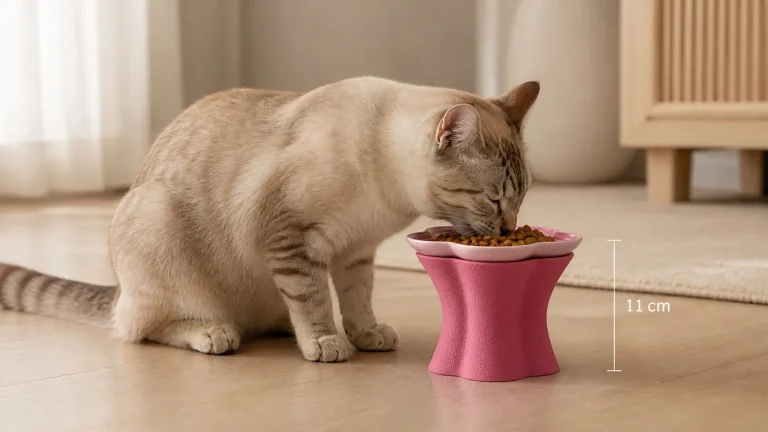
For most adult cats, a good raised bowl height is around 7cm to 12cm from the floor.
Small cats or kittens may prefer a lower height around 3cm to 6cm. Larger cats or senior cats may prefer something closer to 10cm to 12cm.
Watch your cat while they eat. Their head should tilt down gently. Their shoulders should look relaxed. They should not need to stretch upward or bend sharply downward.
| Cat Type | Suggested Bowl Height | Best For |
|---|---|---|
| Small cats or kittens | 3cm to 6cm | Young cats or petite cats |
| Average adult cats | 7cm to 10cm | Most healthy adult cats |
| Large cats | 10cm to 12cm | Bigger or long-bodied cats |
| Senior cats | 8cm to 12cm | Cats with stiffness or reduced mobility |
Petea’s MEJA collection is designed for cat owners who want a more comfortable elevated feeding setup that still looks clean and modern at home.
Should Cat Bowls Be Tilted?
A slightly tilted bowl can help some cats because it brings food closer to the front edge. This means your cat may not need to push their face deep into the bowl.
A gentle tilt can be useful for cats that leave food at the back of the bowl or prefer food to be easier to reach.
However, the tilt should not be too steep. If the bowl angle is too dramatic, food may slide forward and spill. This can make the feeding area messier and less comfortable.
For most cats, a gentle tilt is enough.
Wet Food, Dry Food, or Both?
Another major feeding choice is food type.
Cat owners often ask whether wet food or dry food is better. The honest answer is: it depends on your cat’s needs, your routine, your budget, and your vet’s advice.
Wet Food
Wet food contains more moisture, which can support hydration. This is useful because many cats do not naturally drink a lot of water.
Wet food can also be easier for some cats to chew, especially seniors or cats with dental sensitivity. Many cats also find wet food more aromatic and exciting.
The downside is that wet food spoils faster once served. It should not be left out for too long, especially in warm homes. Wet food bowls also need to be cleaned properly after each meal.
Dry Food
Dry food is convenient, easy to store, and less messy. It works well for cat owners who need a more flexible feeding routine.
However, dry food contains much less moisture than wet food. If your cat mainly eats dry food, water intake becomes even more important.
This is where a dedicated water station can help. A cat that eats mostly dry food should always have easy access to clean, fresh water.
Mixed Feeding
Many cat owners choose mixed feeding, which combines wet and dry food.
This can offer the convenience of dry food and the moisture benefits of wet food. It can also give your cat variety, which may help prevent boredom.
If you mix feeding types, monitor total calories. It is easy to overfeed when giving both wet and dry food, especially if treats are involved too.
Free Feeding vs Scheduled Feeding
How you serve food matters as much as what you serve.
The two most common feeding styles are free feeding and scheduled feeding.
Free Feeding
Free feeding means food is available throughout the day.
This is usually done with dry food. It can be convenient, especially for busy households. Some cats manage free feeding well and eat small amounts throughout the day.
But for other cats, free feeding can lead to overeating and weight gain. It can also make it harder to notice appetite changes, especially in multi-cat homes.
Scheduled Feeding
Scheduled feeding means food is served at specific times.
This can help with portion control, routine, and monitoring appetite. It is especially useful for cats that overeat, cats on weight management plans, or households with more than one cat.
The downside is that it requires more consistency from the owner.
Which One Is Better?
For many cats, scheduled feeding or controlled portions are the better option.
It gives you more control over how much your cat eats and makes it easier to notice if something changes.
If your cat suddenly eats less, eats more, vomits, or avoids food, you can catch the pattern earlier.
Slow Feeding for Cats That Eat Too Fast
Some cats eat like they are competing in a tiny furry tournament.
Fast eating can lead to vomiting, discomfort, and messy feeding areas. It may also happen in multi-cat homes where cats feel they need to finish quickly before someone else steals their food.
If your cat eats too fast, try:
- Smaller portions served more often
- A wider bowl that spreads food out
- A slow feeder
- Puzzle feeders
- Separate feeding zones for each cat
For cats that eat too fast because of stress or competition, the environment matters. Give each cat their own space. Avoid placing bowls too close together. Make mealtime feel calm rather than crowded.
Where Should You Place Your Cat’s Food Bowl?
Location affects how comfortable your cat feels while eating.
Cats usually prefer a quiet, low-traffic area where they can eat without being disturbed. Avoid placing food bowls near loud appliances, busy walkways, or litter boxes.
A good feeding spot should be:
- Quiet
- Clean
- Easy to access
- Away from the litter box
- Away from heavy foot traffic
- Stable, so the bowl does not slide
For nervous cats, a more private feeding area can help. For confident cats, an open space may be fine.
Again, your cat’s behaviour is the best clue.
Should Food and Water Be Placed Together?
Many cats prefer their water to be placed away from their food.
This may be because food crumbs can fall into the water, changing the smell or taste. Cats can be very particular about water freshness, and even small food particles may make them less interested in drinking.
Try placing your cat’s water station slightly away from the food bowl. It does not need to be in another room. Even a separate corner can make the setup feel cleaner.
If your cat does not drink much, consider offering multiple water points around the home.
Why Hydration Is Part of Feeding Choice
Hydration should not be treated as a separate topic. It is part of the full feeding routine.
Cats naturally have a low thirst drive compared to some other pets. If they eat mostly dry food, they may need more encouragement to drink.
Fresh, clean water can make a difference. Some cats prefer moving water because it feels fresher and more interesting.
A water purifier or pet fountain can help create a dedicated drinking station, especially for cats that ignore still water bowls.
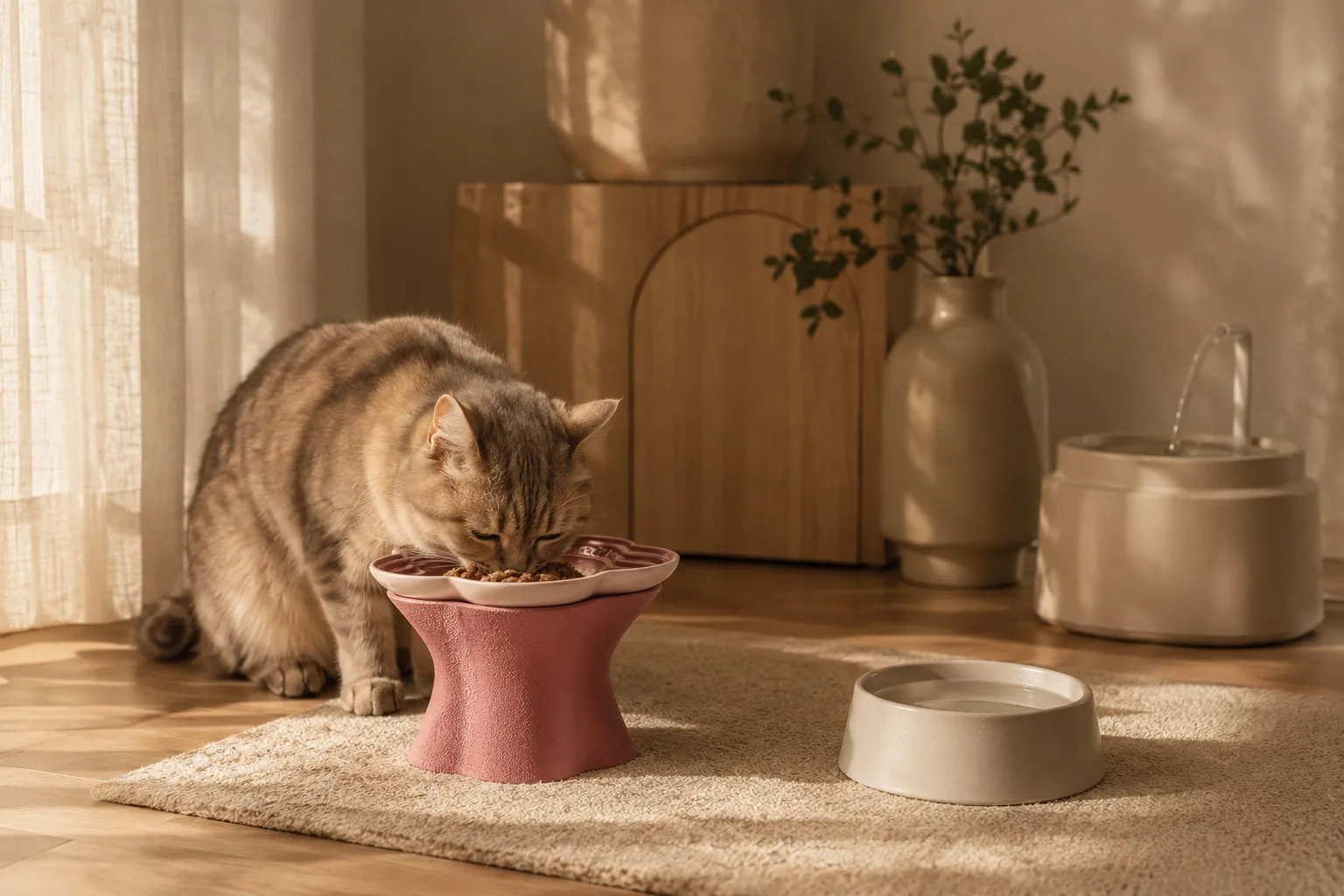
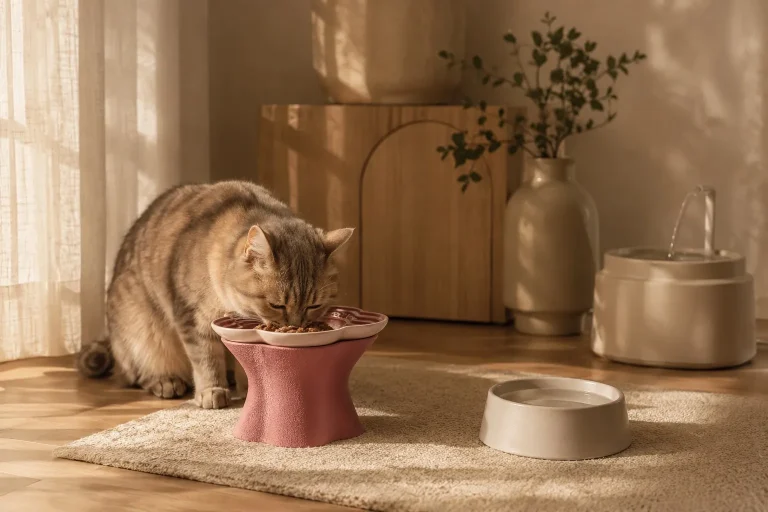
Petea’s MINOM and MINOM Plus are designed for cat owners who want a cleaner, more intentional hydration area at home. Pairing a raised feeding setup with a separate water station creates a more complete daily routine: food in one place, fresh water in another, and less bowl clutter in between.
Feeding Multiple Cats: One Bowl Is Not Enough
If you have more than one cat, feeding choice becomes more important.
Multi-cat homes can create invisible tension during mealtime. One cat may eat faster. One may guard the bowl. One may avoid eating if another cat is nearby.
Even if your cats seem peaceful, they may still prefer their own space.
For multiple cats, try:
- One food bowl per cat
- Separate feeding spots
- Multiple water stations
- Supervised mealtimes if one cat steals food
- Different bowl heights if cats are different sizes
This helps each cat eat at their own pace and reduces competition.
How Often Should You Wash Cat Bowls?
Clean bowls are part of good feeding hygiene.
Food bowls should be washed daily. Wet food bowls should be washed after every meal. Water bowls should also be cleaned regularly, not just refilled.
Even if a bowl looks clean, bacteria and biofilm can build up over time. This is especially true for plastic bowls and water bowls.
Use mild dish soap, rinse thoroughly, and dry the bowl properly. If your cat’s bowl has scratches, cracks, or rough surfaces, consider replacing it.
Common Feeding Mistakes Cat Owners Make
Most feeding mistakes are small and easy to fix.
Using Bowls That Are Too Deep
Deep bowls may make it harder for cats to reach food comfortably. They can also cause more whisker contact.
Placing Water Too Close to Food
If food crumbs fall into the water, your cat may avoid drinking. A separate water station can help.
Ignoring Bowl Height
A bowl that is too low may cause some cats to crouch uncomfortably. A bowl that is too high may cause stretching. The best height should match your cat’s posture.
Using Scratched Plastic Bowls
Scratched plastic can trap odour and bacteria. If your cat has chin acne or seems sensitive, consider switching to ceramic, stainless steel, or glass.
Feeding All Cats in One Area
Multi-cat homes need space. Separate bowls and feeding areas can reduce stress.
Not Watching Eating Behaviour
Changes in appetite, chewing, swallowing, or food preference can signal discomfort or health issues. Do not ignore sudden changes.
A Simple Petea Feeding Setup for Everyday Comfort
A good cat feeding setup should feel easy for both you and your cat.
Here is a simple Petea-style setup:
1. Raised Feeding with MEJA
Start with a raised feeding stand from the MEJA collection. A slightly elevated bowl can help your cat eat in a more relaxed position, especially if the height suits their body size.
MEJA is designed to fit naturally into modern homes, so your cat’s feeding area does not need to look messy or temporary.
2. Wide, Shallow Bowl for Whisker Comfort
Pair the raised stand with a wide, shallow bowl or suitable plate-style dish. This gives your cat more room around the whiskers and makes food easier to reach.
For cats that dislike deep bowls, this small change can make mealtime noticeably calmer.
3. Separate Water Station with MINOM or MINOM Plus
Place water away from the food bowl. A dedicated water station with MINOM or MINOM Plus can make drinking feel cleaner and more inviting.
This is especially useful if your cat eats mostly dry food or tends to ignore still water bowls.
4. Keep the Area Clean and Consistent
Wash food bowls daily, refresh water often, and keep the feeding spot calm. Cats appreciate routine, even when they pretend they are mysterious forest spirits with rent-free housing.
How to Know If Your Feeding Setup Is Working
A good feeding setup should make your cat look comfortable and relaxed.
Signs that the setup is working include:
- Your cat eats calmly
- They do not pull food onto the floor as often
- They finish food more comfortably
- The bowl does not slide around
- Their posture looks relaxed
- They drink water more regularly
- The feeding area stays cleaner
If your cat continues to avoid food, leaves most meals untouched, or shows sudden appetite changes, speak to a vet. Feeding setup can improve comfort, but health issues should always be ruled out.
When to See a Vet About Feeding Problems
Not every feeding issue is caused by the bowl.
Speak to a vet if your cat:
- Stops eating suddenly
- Loses weight
- Drools while eating
- Paws at their mouth
- Vomits frequently
- Chews on one side only
- Seems painful when eating
- Refuses food they normally enjoy
- Drinks much more or much less than usual
These signs may be linked to dental pain, nausea, digestive issues, stress, kidney problems, or other medical concerns. A comfortable bowl can help the routine, but it is not a replacement for proper veterinary care.
Final Thoughts: The Best Feeding Choice Is the One Your Cat Actually Enjoys
The best feeding choice for your cat is not just wet food or dry food. It is not just a bowl or a stand.
It is the whole daily setup.
A comfortable cat feeding routine includes the right bowl shape, the right bowl height, clean materials, fresh water, proper food portions, and a calm feeding area.
For many cats, the best starting point is simple: a wide, shallow bowl, a raised feeding height around 7cm to 12cm for adult cats, and a separate water station.
From there, observe your cat. If they eat calmly, drink more confidently, and make less mess, you are probably on the right track.
Explore Petea’s MEJA elevated dining collection and hydration essentials to create a feeding space designed around how cats naturally eat and drink.