

TL;DR: The Best Cat Bowl Setup
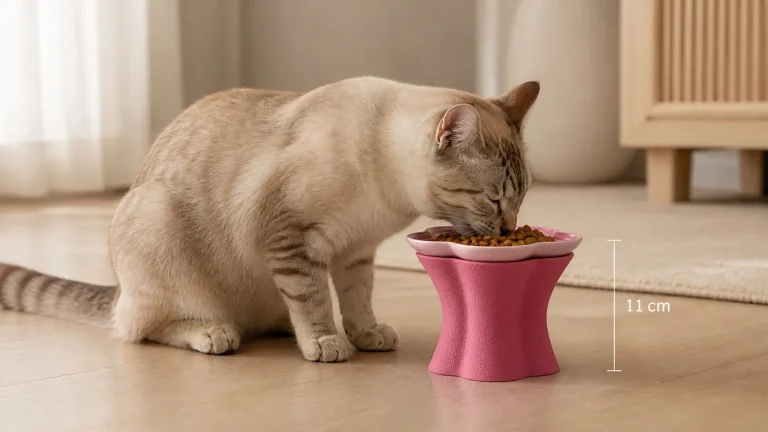
The best cat bowl height for most adult cats is around 7cm to 12cm from the floor. This helps your cat eat in a more relaxed posture without bending too low or stretching upward.
To reduce whisker contact, choose a wide, shallow bowl instead of a deep, narrow bowl. Stainless steel, ceramic, or glass are usually better than plastic because they are easier to clean and less likely to trap odours or bacteria.
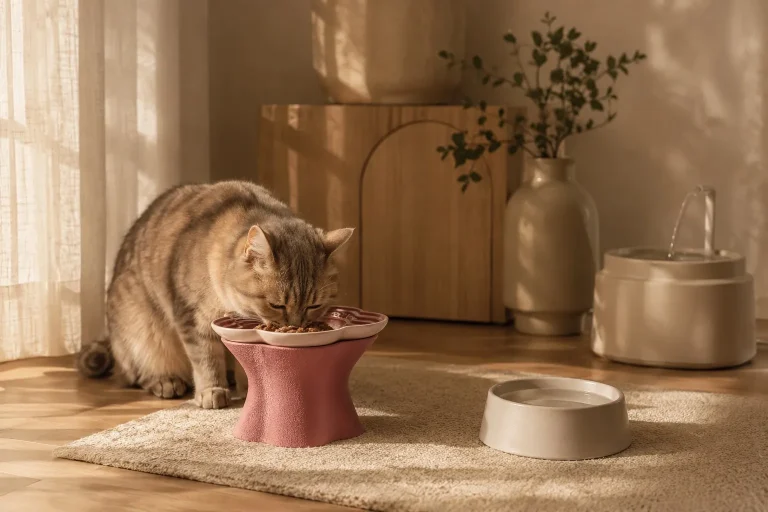
For a simple Petea-style setup, use a raised bowl stand such as MEJA Elevated Dining, pair it with a wide shallow plate like the setup used with MEJA Bunga, and keep fresh drinking water separate with MINOM or MINOM Plus.
Choosing the right cat bowl height and whisker-friendly bowl can make mealtime more comfortable for your cat.
If your cat pulls food out of the bowl, eats from the floor, leaves food around the edges, or seems uncomfortable bending down, the issue may not always be the food. Sometimes, it is the feeding setup.
Two simple changes can make a big difference: raising the bowl to a better height and choosing a wide, shallow bowl that does not press against your cat’s whiskers.
Quick Answer: What Is the Best Cat Bowl Height?
For most adult cats, a good bowl raiser height is around 7cm to 12cm from the floor.
This height usually allows your cat to eat with their neck slightly lowered while keeping their shoulders relaxed. The bowl should not be so low that your cat has to crouch deeply, and it should not be so high that they need to stretch upward.
The perfect height depends on your cat’s size, age, body shape, and eating posture.
Suggested Cat Bowl Height by Cat Size
| Cat Type | Suggested Bowl Height | Best For |
|---|---|---|
| Small cats or kittens | 3cm to 6cm | Young cats, petite cats, or cats under 3kg |
| Average adult cats | 7cm to 10cm | Most healthy adult cats |
| Large cats | 10cm to 12cm | Bigger cats or long-bodied cats |
| Senior cats | 8cm to 12cm | Cats with stiffness, reduced mobility, or joint discomfort |
These are general guidelines, not strict rules. Some cats prefer a lower setup, while others feel more comfortable with a slightly raised bowl.
How to Check If Your Cat’s Bowl Height Is Right
Watch your cat while they eat.
A good bowl height should allow your cat to keep a relaxed posture. Their head should tilt down gently, their front legs should stay natural, and their shoulders should not look tense.
If your cat has to reach upward, the bowl is too high. If they need to bend their neck sharply downward, the bowl may be too low.
Are Raised Cat Bowls Good for Cats?
Raised cat bowls can be helpful for some cats, especially senior cats, larger cats, and cats that seem uncomfortable eating from the floor.
A raised bowl may reduce how much your cat needs to bend their neck during meals. This can make eating feel calmer and more natural, especially for cats that prefer a cleaner, more stable feeding area.
However, raised bowls are not automatically better for every cat. The best setup is the one that matches your cat’s natural posture and eating behaviour.
Should a Cat Bowl Be Tilted?
A slightly tilted bowl can help some cats because it brings food closer to the front edge of the bowl. This may reduce the need for your cat to push their face deep into the bowl.
For most cats, a gentle tilt of around 10 to 15 degrees is enough.
Avoid steeply tilted bowls because food may slide forward too much, making mealtime messier and less comfortable.
What Is Whisker Fatigue?
Whisker fatigue is a common term used to describe possible discomfort when a cat’s sensitive whiskers repeatedly touch the sides of a deep or narrow bowl.
A cat’s whiskers are highly sensitive. They help cats understand space, movement, and nearby objects. Because of this, some cats may dislike eating from bowls that constantly press against their whiskers.
Whisker fatigue is not considered a disease, and not every cat is affected. However, if your cat seems fussy with deep bowls, pulls food onto the floor, or avoids food around the edges, a wider and shallower bowl may help.
Signs Your Cat May Dislike Their Bowl
Your cat may prefer a different bowl if they often:
- Pull food out and eat from the floor
- Only eat from the centre of the bowl
- Leave food around the edges
- Paw at the bowl before eating
- Seems hesitant even when hungry
- Prefer flat plates over deep bowls
- Make a mess while trying to avoid the sides
If your cat suddenly stops eating, loses weight, drools, vomits, paws at their mouth, or seems painful while eating, do not assume it is only a bowl issue. Speak to a vet to rule out dental pain, nausea, stress, or illness.
Best Bowl Shape to Reduce Whisker Contact
The best cat bowl shape is usually wide, shallow, and low-sided.
This gives your cat more space to eat without pushing their whiskers against the bowl walls. It also makes food easier to reach, especially for cats that dislike deep feeding bowls.
Look for These Bowl Features
- Wide opening: Gives your cat more whisker space
- Shallow depth: Prevents your cat’s face from going too deep into the bowl
- Low sides: Makes food easier to reach
- Stable base: Prevents sliding during meals
- Easy-to-clean material: Helps maintain daily hygiene
A flat plate can also work well, especially for wet food. However, some cats may push food over the edge, so a shallow dish with a gentle rim is often more practical.
Best Bowl Materials for Cats
The material of your cat’s bowl matters because it affects hygiene, smell, durability, and long-term comfort.
Stainless Steel
Stainless steel is one of the best options for cat bowls. It is durable, easy to clean, and less likely to hold smells compared to plastic.
It is also a good choice for cats that are prone to chin acne or skin irritation.
Ceramic
Ceramic bowls can feel stable and premium. They are heavier, so they move less during feeding.
Choose glazed ceramic that is food-safe and free from cracks. Once ceramic is chipped or cracked, it can trap bacteria and should be replaced.
Glass
Glass is smooth, easy to clean, and does not absorb odour. It can be a good option if it is thick, stable, and not easily tipped over.
Plastic
Plastic is lightweight and affordable, but it is not always ideal for long-term feeding.
Plastic can scratch over time, and those scratches may trap bacteria. Some cats may also react to plastic bowls with chin acne or irritation.
Food Bowl vs Water Bowl: Should They Be the Same?
Not always.
For food, a wide shallow bowl is usually best. For water, cats often prefer a wide drinking surface too, but many cats are also attracted to clean, fresh, moving water.
If using a water bowl, avoid narrow and deep bowls. A wider water surface can make drinking more comfortable and may encourage better hydration.
Should Food and Water Be Placed Together?
Many cats prefer their water to be placed away from their food.
This is because cats can be particular about cleanliness. If food crumbs fall into the water, some cats may avoid drinking. A separate water station can help keep water fresher and more appealing.
For multi-cat homes, it is also helpful to provide more than one feeding and drinking area. This reduces competition and gives each cat a calmer space.
A Simple Petea Feeding Setup for Everyday Comfort
A better feeding area does not need to be complicated. Start with three things: better height, a whisker-friendly bowl, and cleaner drinking water.
1. Use MEJA Elevated Dining for Better Eating Posture
MEJA Elevated Dining is designed to raise your cat’s bowl to a more comfortable height, helping reduce the need to crouch too low during meals.
It also keeps the feeding area neater and more intentional, especially if you want your cat’s dining space to blend naturally into a modern home.
2. Choose MEJA Bunga for a Whisker-Friendly Bowl Setup
For cats that dislike deep or narrow bowls, MEJA Bunga offers a more open feeding setup when paired with a suitable shallow plate.
This helps reduce whisker contact and makes food easier to reach, especially for cats that tend to pull food out of the bowl.
3. Keep Water Separate with MINOM or MINOM Plus
Many cats prefer their drinking water away from their food. A dedicated water station with MINOM or MINOM Plus can help make drinking water feel fresher, cleaner, and more inviting.
Together, this creates a simple daily setup: raised food, whisker-friendly feeding, and clean water in a separate drinking area.
How to Choose the Right Setup for Your Cat
The best feeding setup depends on your cat’s body, age, eating style, and comfort.
Start with this simple checklist:
- Use a bowl raiser around 7cm to 12cm for most adult cats
- Choose a wide, shallow bowl
- Use stainless steel, ceramic, or glass
- Avoid deep, narrow bowls
- Keep food and water bowls clean
- Place drinking water slightly away from food
- Observe your cat’s eating posture and behaviour
Small changes can make mealtime feel easier and calmer. Your cat should be able to eat without stretching, crouching too much, or pushing their whiskers into the sides of the bowl.
When to See a Vet
If your cat’s eating behaviour suddenly changes, it is important to look beyond the bowl.
Speak to a vet if your cat:
- Stops eating suddenly
- Loses weight
- Drools while eating
- Paws at their mouth
- Vomits frequently
- Seems painful when chewing
- Refuses food they normally enjoy
Bowl comfort can help, but appetite changes may also be linked to dental pain, nausea, stress, digestive issues, or other health problems.
Final Thoughts
The best cat bowl setup is simple: the right height, a wide shallow bowl, clean materials, and a separate water station.
For most adult cats, a raised bowl around 7cm to 12cm high is a good starting point. Pair it with a wide, shallow bowl to reduce whisker contact and make food easier to reach.
A better feeding setup does not need to feel clinical or complicated. With the right bowl height, a whisker-friendly dish, and clean water placed nearby, your cat’s daily routine can feel calmer, neater, and more comfortable.
Explore Petea’s elevated dining and hydration essentials to build a feeding space designed around how cats naturally eat and drink.