

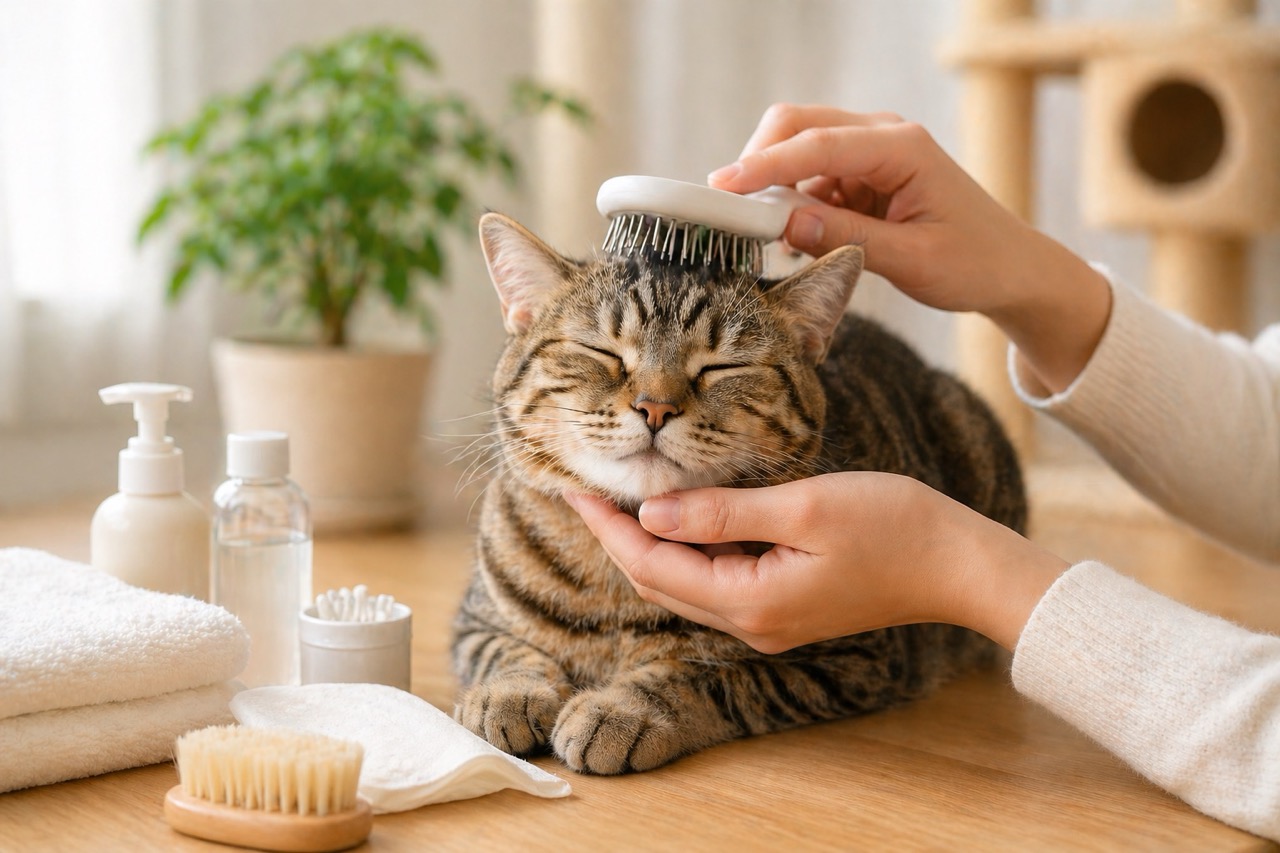

Cats are known for being clean animals.
You have probably seen your cat grooming several times a day, with a quick lick here and a careful paw swipe there.
But even with their natural grooming habits, cats still need help from us to stay truly clean, healthy, and comfortable.
Cat hygiene is not only about appearance. It supports skin health, coat condition, dental health, litter box habits, and overall wellbeing.
From brushing and nail trimming to litter box care and clean feeding areas, small hygiene habits can prevent bigger problems later.
Why Cat Hygiene Matters
Your cat may groom themselves often, but grooming alone does not cover everything.
Cats still need support with areas they cannot properly manage on their own, such as their nails, teeth, ears, eyes, litter box, and feeding setup.
Good hygiene helps reduce the risk of skin irritation, hairballs, infections, dental disease, urinary stress, and discomfort around daily routines.
It also gives you a chance to notice small changes early, before they become harder to manage.
Regular Brushing Helps More Than You Think
Even though cats groom themselves, regular brushing is still important.
Brushing helps remove loose fur, reduce shedding, prevent hairballs, and keep the coat in better condition.
It also gives you a quiet moment to check your cat’s skin for fleas, wounds, lumps, irritation, bald spots, or anything unusual.
Short-haired cats may only need brushing once or twice a week. Long-haired cats, such as Persians or Maine Coons, may need daily grooming to prevent tangles and mats.
Mats are not just messy. They can pull on the skin, trap dirt, and create discomfort if left untreated.
Keep the Litter Box Clean
A clean litter box is one of the most important parts of cat hygiene.
Cats are naturally sensitive to smell and cleanliness. If the litter box is dirty, some cats may avoid using it altogether.
This can lead to stress, accidents around the house, or possible urinary issues, especially if your cat starts holding urine for too long.
As a simple routine, scoop the litter box at least once a day. Do a full litter change and clean the box regularly, depending on the type of litter you use and the number of cats in your home.
For multi-cat households, having enough litter boxes is also important. A common guideline is one litter box per cat, plus one extra.
Check Your Cat’s Ears and Eyes
Your cat’s ears should look clean, light pink, and free from strong odour.
A small amount of wax can be normal, but heavy buildup, redness, scratching, head shaking, or a bad smell may point to ear mites or infection.
If cleaning is needed, use a vet-approved ear cleaner and a soft cotton pad. Avoid using cotton buds inside the ear canal because they can push debris deeper or cause injury.
Your cat’s eyes should also be clear and comfortable. Mild tear staining or small discharge can happen occasionally, but redness, swelling, cloudiness, squinting, or persistent discharge should be checked by a vet.
Dental Hygiene Is Often Overlooked
Dental care is one of the most neglected parts of cat hygiene, but it can affect your cat’s whole body.
Plaque and tartar can lead to bad breath, gum inflammation, tooth pain, difficulty eating, and infection.
Over time, dental problems can become painful and may require professional treatment.
Brushing your cat’s teeth with cat-safe toothpaste is one of the best habits to build. Never use human toothpaste, as it can contain ingredients that are unsafe for cats.
If brushing is difficult, ask your vet about dental treats, dental diets, water additives, or other safe options that suit your cat.
Bathing Is Only Needed Sometimes
Most healthy cats do not need regular baths.
Bathing too often can strip natural oils from the coat and may irritate the skin.
However, a bath may be needed if your cat gets into something sticky, oily, dirty, or unsafe to lick off. It may also be needed if your cat has a medical condition or cannot groom properly due to age, illness, or mobility issues.
Use only cat-specific shampoo and make sure your cat is dried properly afterward. If your cat becomes extremely stressed during baths, speak to a vet or professional groomer for safer options.
Trim Your Cat’s Nails Safely
Indoor cats may not wear down their nails naturally.
Overgrown nails can become sharp, snag on fabric, scratch skin, or in serious cases, curl into the paw pad.
Check your cat’s nails every few weeks and trim only the sharp tip. Avoid cutting the pink area, called the quick, because it contains blood vessels and nerves.
If you are unsure how to trim your cat’s nails, ask your vet or groomer to show you the proper technique.
Clean Food and Water Bowls Daily
Feeding hygiene is easy to overlook, but it matters every day.
Food bowls can collect oils, saliva, and leftover food. Water bowls can develop dust, fur, and biofilm, especially if water sits too long.
This can affect your cat’s comfort, appetite, hydration, and skin around the mouth.
Wash food bowls daily with mild, unscented soap. Refresh drinking water often and keep bowls away from the litter box.
Stainless steel and ceramic bowls are usually easier to clean than scratched plastic bowls, which can trap residue and bacteria over time.
For cleaner daily hydration, the MINOM Plus Pet Water Purifier by Petea helps provide filtered water in a more hygienic setup, making fresh drinking water easier to maintain throughout the day.
Watch for Signs Your Cat Needs Extra Help
Some hygiene problems are not just cosmetic.
If your cat stops grooming, develops a greasy or matted coat, has bad breath, scratches their ears often, avoids the litter box, or has discharge from the eyes or nose, it may be time to speak with a vet.
Sudden changes in grooming habits can sometimes be linked to pain, stress, dental disease, arthritis, obesity, or other health concerns.
When in doubt, it is always better to get professional advice early.
Final Thoughts: Hygiene Is Health
Keeping your cat clean is not just about having a tidy pet or a fresh-smelling home.
It is about protecting their comfort, confidence, and long-term health.
Regular brushing, clean bowls, fresh water, nail trims, dental care, and litter box maintenance all work together to support your cat’s wellbeing.
Your cat may be independent, but they still rely on you for the daily details they cannot manage alone.
With gentle, consistent hygiene habits, your cat can stay cleaner, healthier, and more comfortable every day.
Note: Always consult your veterinarian if you notice sudden changes in grooming, eating, drinking, litter box habits, or behaviour.
